
spilling the beans
The varieties of beans I have in my kitchen cupboard have expanded quite a bit over the last few years. They are so pretty and colourful that I feel I want every single variety. I’ve always adored broad beans, and also have a soft spot for fresh borlotti beans, the haricots coco that appear in Cordes market in mid-August; so good, slowly baked in the oven with a carrot, a ripe tomato, a bulb of garlic (with the top chopped off), about six black peppercorns, a bay leaf and a sprig of thyme, covered with salted water and some tin foil laid over the top.
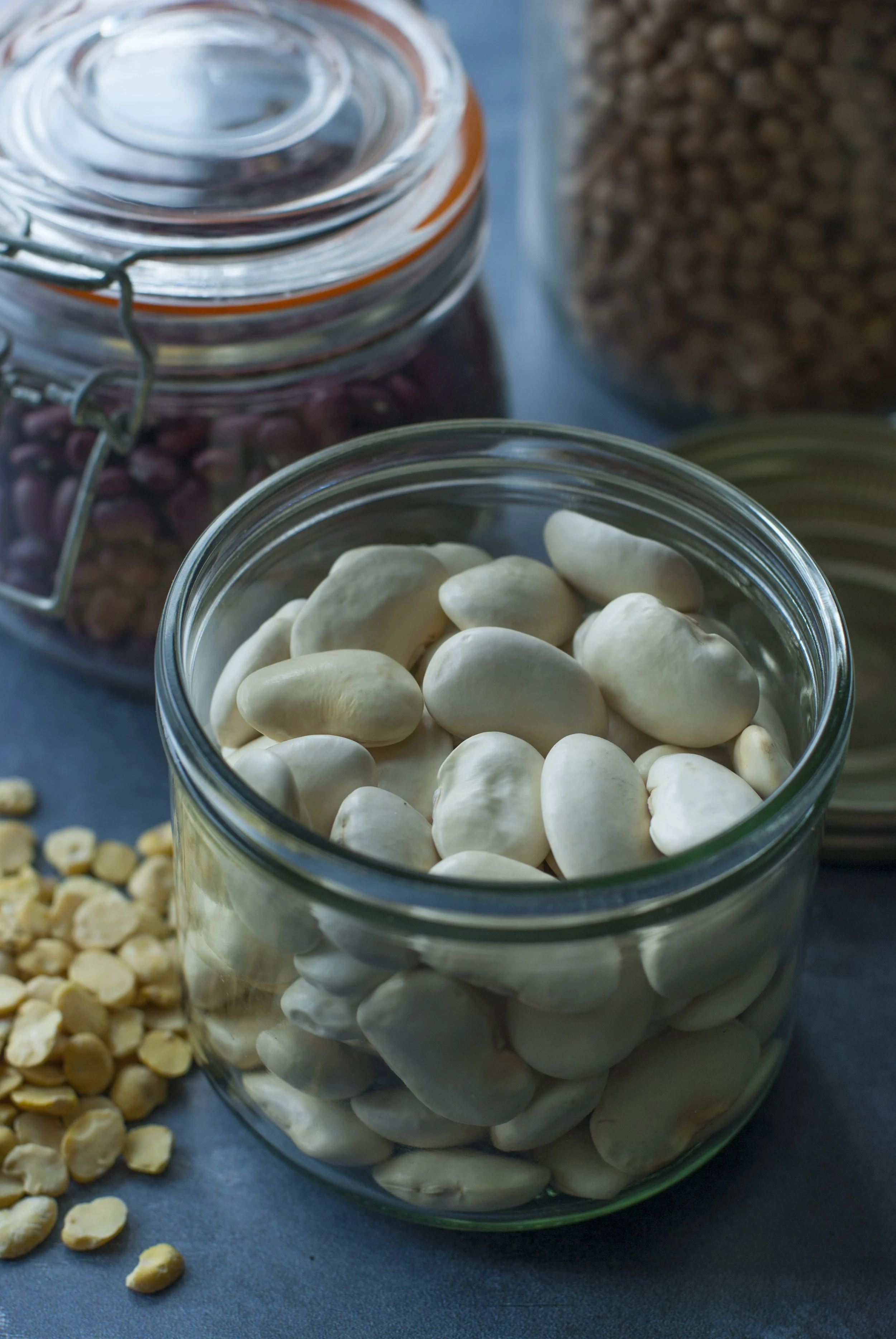
A variety of beans from my hoard
It’s worth noting that those living in the Blue Zones (the world’s five longevity hotspots), where the populations often live beyond their 100th birthdays, all eat lots of beans. (They are also passionate gardeners – like my 101-year-old mother.) Recent research by Zoe demonstrates that beans give excellent support to our gut health, and are high in both protein and fibre.
Britain’s original bean is the fava bean, a staple of the Iron age. It is also the most commonly grown bean throughout the world. In 2012 three growers from the Norwich area – Joshua, Nick and William – founded Hodmedod, (choosing a near-extinct East Anglian dialect word for hedgehog or snail as their name). Back in 2008 they had done some work with a small non-governmental community group in Norwich, to find out whether the city could feed itself from a relatively small area. The study’s conclusion was that it is indeed possible, but only if people change their diets towards plant-based protein, notably beans. (Eating meat necessitates extensive, intensive farming.) The founders of Hodmedod saw that pulses could be ‘an incredible engine for change’. So they enlisted the help of local farmers, and now have a group of about 35 farmers growing particular varieties of beans in particular ways. Thanks to them we have, alongside many other exciting previously unavailable vintage varieties, British fava beans to eat again!
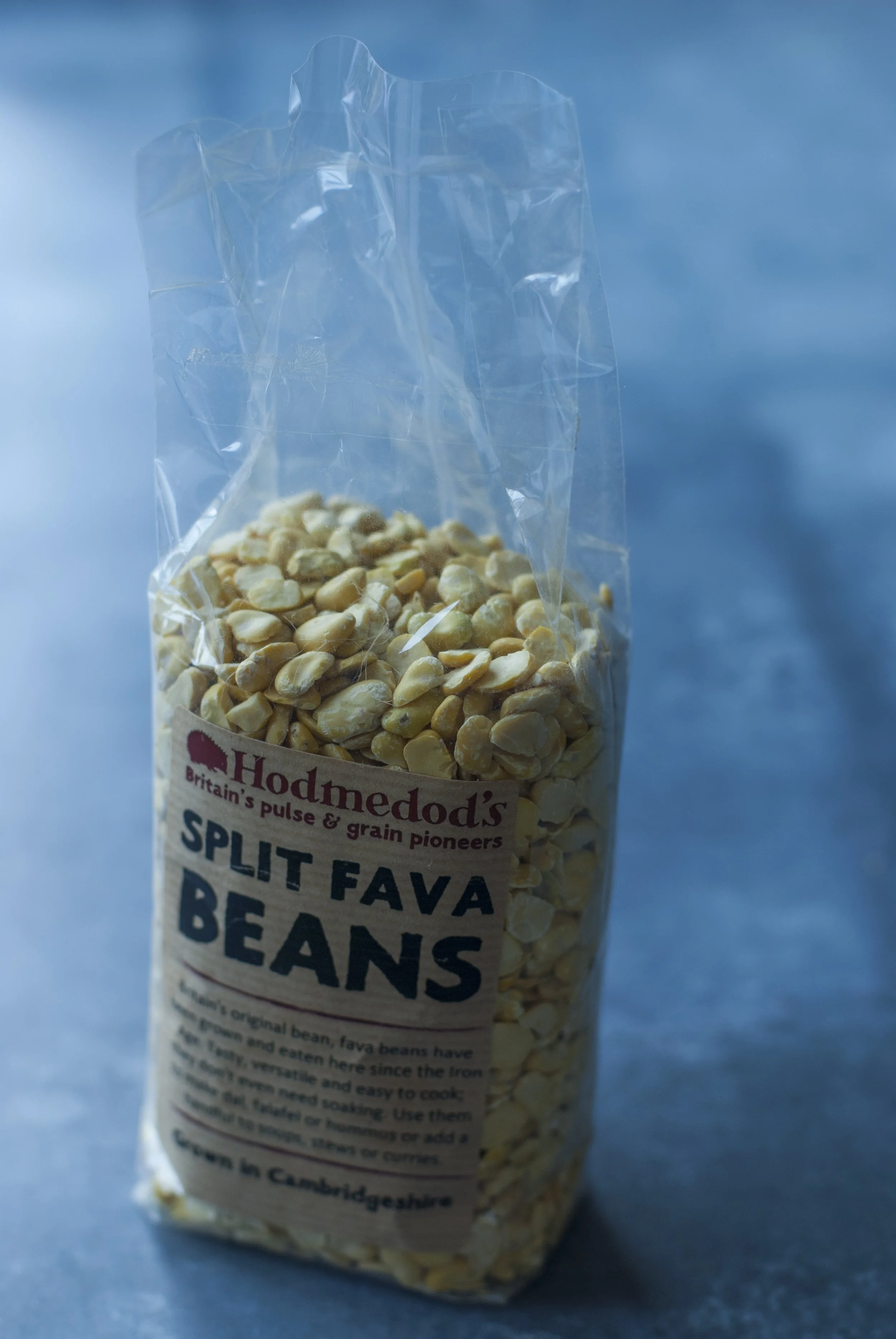
Hodmedod’s British-grown split fava beans
Fava beans beans actually feature in the world’s most famous bean dish ful medames (see page 45 of my book). It’s delicious, highly nutritious and a favourite breakfast dish in the Middle East, including for the evening break-fast of Ramadan. Ful medames is the national dish of the Egyptians, and we know through DNA tests on Egyptian mummies that the pharaohs enjoyed it over three millennia ago!
Haricot beans – our so-called ‘French beans’ – actually originated in the Americas, and were brought to Europe in the first half of the sixteenth century. In direct contrast to potatoes, they quickly became favourites of European gardeners and cooks.
Beans lend themselves to a fantastic variety of ways of being eaten. Their tender young sprouts are scrumptious and energising, with a wonderful texture, and are edible within days of being soaked in water. Bean sprouts are excellent in salads and stir-fries. Falafel also uses soaked pulses (fava beans or chickpeas, depending on the area), which are then ground (see page 46 of my book). Soya beans are fermented to make tamari, miso and tofu, an excellent source of protein.
To make tofu, the soya beans are soaked and then ground with additional water. The mixture is boiled and filtered to create a warm ‘milk’, which is then curdled. Tofu is incredibly versatile. Once, on a visit to the Hong Kong Conservatory of Music, I was taken out to lunch by my opposite number (Head of Postgraduate Studies and Research). I explained that I was vegetarian and coeliac and couldn’t even eat rice … but that I loved tofu. Plate after plate of the most unbelievable variety of tofu dishes continued to arrive as we happily talked together. I was amazed and in heaven.
Beans are also a great joy to grow. Many varieties have flowers that look so handsome in the garden, trailing up their supports. This year I’m growing peas, broad beans, purple Shiraz mangetout, dwarf French beans, chickpeas and borlotti beans. As well as feeding us so healthily, beans contribute to the health of my garden’s soil as they grow, quietly enriching it with nitrogen and activating soil-bound phosphorus ready for next year’s crop. Perhaps tomatoes?
Hodmedod’s split fava beans, which I adore, feature in this month’s recipe …