
raw energy
Making the change to a vegetarian diet, eating raw food for breakfast and lunch and something cooked in the evening, was revolutionary for me. It completely changed my life in just six days! Having spent most of my twenties in a depressed brain fog – not a good state to be in when trying to write a PhD, which was something I passionately wanted to do – I learnt, at the age of 30, that I was coeliac. Going ‘wheat-free’ (or to be precise grain-free, unlike most coeliacs I can’t even tolerate rice) was a dramatic improvement, but I still felt I didn’t have my full energy until, three months later, one of my students (an excellent cellist who I was teaching to play the viol) told me, ‘All the musicians in London go to Dr Latto’. So off I went to Dr Gordon Latto, a naturopath, and it was on his advice that I became a vegetarian, eating mostly raw food in the daytime. Thanks to his guidance, I finished my PhD three months later on a wonderful high, feeling that I now had finally begun to understand my body’s needs – and have never looked back.
I still generally eat a raw breakfast: mixed defrosted frozen fruit, such as raspberries, strawberries, cherries and some of my own blackcurrants and blackberries; a mixture of seeds and nuts like chia seeds, hemp seeds, pumpkin seeds (said to have more protein in them than any meat), sunflower seeds, golden linseeds, cashews, almonds, walnuts and pistachios; seaweed; and a 15g scoop of Zoe’s ‘Daily30+’ with some water kefir or kombucha to lubricate it. This is designed to boost my fibre intake and support my microbiome. I sometimes add a tablespoon of sheep or goat’s yoghurt as well (but if I eat more than a certain amount of dairy I tend to have an inflammation reaction).
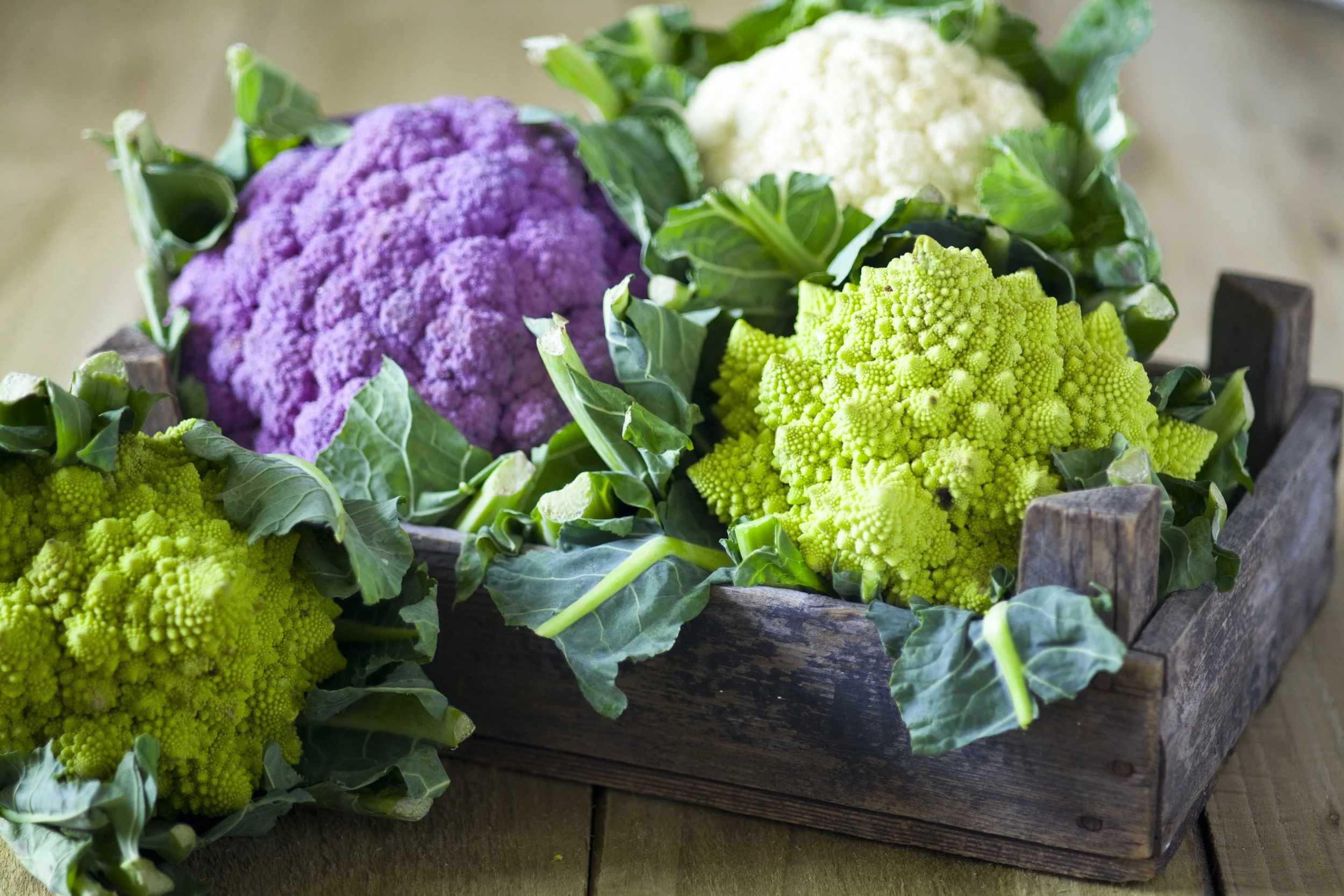
A mix of different cauliflowers from our brilliant local grower, Pawel
I very much enjoy a raw lunch too, particularly if I’m feeling a bit sluggish! Later in the month I’ll be posting a recipe for my favourite cauliflower couscous. Guacamole is also delicious, with our veg grower Pawel’s organic tomatoes, when they are in season. In the winter I often have an avocado with tamari (made from fermented soya beans) with some of Pawel’s brilliant mixed salad, perhaps adding some deep purple radicchio and slices of orange, to add more colours of the rainbow and those extra polyphenols. Lemony carottes râpées (grated carrots; see page 168 of my book) are another raw energy delight, a recipe I was introduced to by a family friend, Marie-France, the first night I arrived in Paris to do a year’s research in the Bibliothèque Nationale on French Baroque music. I also find falafel (see page 46) leave me feeling beautifully alert and satisfied. These are made from chickpeas soaked overnight and then deep fried, so they are crispy on the outside and raw inside.
But I do like to eat a hot cooked meal for supper: I find it a comfort, a contrast and enjoy the creativity of working with different cooked ingredients. It’s easier on the digestion, too, in the latter part of the day. In the winter I will often eat simple hot food for lunch too: perhaps some delicious fresh chopped leeks steam-fried in olive oil with a dash of water, to which I add, once the leeks are starting to cook nicely, some wonderful brussels sprouts tidied at the stem and chopped in half, served with a soft organic poached egg on top. If the rain has been thundering down for days – as it can sometimes do in Wales – and I’m not too pressed for time I’ll make a pot of minestrone for lunch, with nourishing beans and parmesan rind, to warm us all up and last for several days!
Raw or cooked, I take my cues from the wonderful produce we receive from Pawel, which is always superb and out-of-this-world bouncy with freshness – it literally squeaks! I feel this freshness is perhaps even more important when the vegetables are going to be consumed raw: tired supermarket produce surely can’t give the same vitality.