
buckwheat
I love buckwheat. It makes brilliantly light pancakes, scrumptious blini, excellent noodles – and magically short shortbread.
My first encounter with buckwheat was at the hands of the fabulous chef David Adlard. One evening, my parents took me and my siblings for a very special family treat to a new restaurant that, despite being in the depths of Norfolk, had quickly earned a high reputation. We had a family photo before we left, and set off, mouths watering, from their mill on the Waveney weaving our way through the countryside to a former post office in Wymondham (pronounced ‘wind’m’). This was shortly after I’d been diagnosed as intolerant to grains – and it was very early days in having to explain such things to restaurants. My dietary issues had been made known with some trepidation. But I needn’t have worried: David met the challenge with aplomb! His pièce de resistance for me was an incredibly light buckwheat crêpe filled with a very special cheese fondue (see page 118 of my book). It was unspeakably delicious! Afterwards he actually gave me the recipe, along with several others – which were proudly pasted into my earliest handwritten cookery notebook. I was so touched that this genius chef had to gone to such trouble on my behalf, and was pleased to hear that his restaurant received a Michelin star a couple of years later.
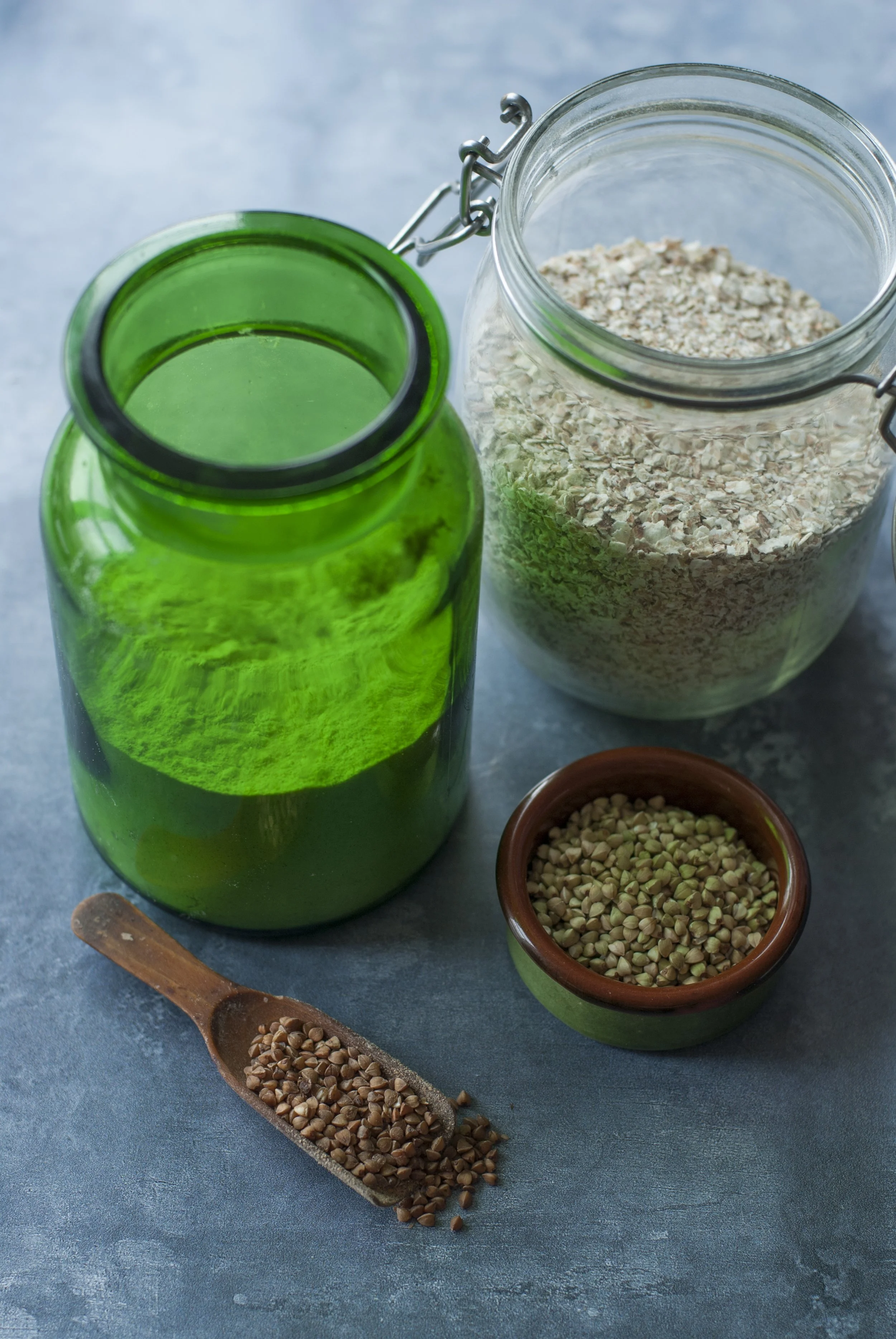
Buckwheat in various forms, clockwise from top left: buckwheat flour; buckwheat flakes; whole buckwheat; and roasted whole buckwheat.
Buckwheat’s wild ancestor is found in the Himalayas and China, and comes from the same family as sorrel, rhubarb and dock. It will grow quite happily in the poorest of soils and quite cold conditions. It’s cultivated for its small clusters of curiously shaped seeds, with a triangular cross-section, and can yield two or three crops a year. The name comes from the Dutch bockweit – which translates as ‘beech wheat’, likening the seeds to beech nuts, which, whilst being much larger, are also triangular.
Archaeological evidence shows that buckwheat had arrived in Japan, probably via Korea, by the fifth century BCE. It grows well in the mountainous region of Nagano, where the famous buckwheat soba noodles have been eaten since the seventeenth century. Another hearty dish cooked by the natives of Nagano is oyaki, made from fermented buckwheat dough with a stuffing of local mountain vegetables, roasted on an iron dish and served hot.
Russia and Eastern Europe is the home of the staple kasha, made from roasted wholegrain buckwheat (see page 188) and often served with a dollop of soured cream (called smetana in Eastern Europe – I rather like idea that the surname of the great nineteenth-century Czech composer, Sergei Smetana, means soured cream – both are delicious!) Kasha is often garnished with onions and wild mushrooms, and plain kasha goes well with mushroom stroganoff (see page 92). Blini – made with buckwheat flour, milk and eggs – are another Eastern European and Russian favourite. They make excellent canapés with a wide variety of possible toppings (see pages 102–3). Great for parties!
But top of my worldwide buckwheat specialities list come Breton galettes de sarrasin (buckwheat pancakes, see page 278) served with a wide range of fillings (see pages 88 and 278) and some local cider. We once were served wonderful homemade cider in Brittany, while stopping over with a farming family before catching our boat, and it was so good that I drank a bit more than is my normal habit. To my amazement, I woke up as clear as a bell. It must have been my first taste of ‘natural’ cider, without the sulphates found in commercial brands. Crêpes Normandes (Normandy pancakes) are slightly thinner than the galettes and the dessert version (see page 278) is traditionally filled with tart apples (such as Cox’s) sautéed with a dash of Calvados.
These days, chefs are experimenting with using the unique taste of buckwheat in less traditional manners. It can make a fabulous chocolate cake, set off with ground roasted hazelnuts and, later in the month, I will share with you a recipe for a very short shortbread!